
Insights Investing
What Massive AI IPOs Signal About Market Sentiment: A Value Investor’s Perspective on Burry’s Thermometer
Podcast · Listen (20 min)
SpaceX, OpenAI, Anthropic: Burry's 2000-Style IPO Warning | Stock Market
In brief
DeepValues Research, “What Massive AI IPOs Signal About Market Sentiment: A Value Investor’s Perspective on Burry’s Thermometer” (Nov 14, 2026): The unprecedented, record-breaking capital raises by private behemoths like SpaceX, Anthropic, and OpenAI reflect heightened market speculation rather than prudent intrinsic valuations across public equity markets.
Source: https://research.deepvalues.ai/insights/2026-11-14-michael-burrys-warning-on-the-ai-ipo-bubble/ · Markdown
Contents
- 1. The 2026 Mega-IPO Wave: Burry’s Warning and Market Context
- 2. The Capital Allocation Incentive: Dilution, Euphoria, and Market Timing
- 3. Historical Evidence: IPO Cycles as Market Thermometers (1980–2022)
- 4. Fundamental Disconnect: Capital Consumption vs. Owner Earnings
- 5. Key numbers
- 6. What would change our view
- 7. Practical Takeaway for Long-Term Investors
- 8. Sources
The unprecedented, record-breaking capital raises by private behemoths like SpaceX, Anthropic, and OpenAI reflect heightened market speculation rather than prudent intrinsic valuations across public equity markets. While a surge in initial public offering (IPO) activity acts as a market "thermometer" indicating extreme financial euphoria rather than a precise clock for an impending crash, value investors must maintain strict analytical discipline, focus on underlying owner earnings, and demand an uncompromised margin of safety. For long-term investors evaluating current macro conditions, understanding that corporate insiders systematically issue equity during peak speculative windows to transfer capital-expenditure risk to the public provides a critical defense against buying into narrative-driven market tops.
1. The 2026 Mega-IPO Wave: Burry’s Warning and Market Context#
In May, investor Michael Burry issued a public warning on Twitter regarding the burgeoning AI initial public offering environment, drawing direct parallels between current capital-raising trends and the peak of the 2000 Dot-Com bubble. Based on analysis shared on the New Money channel, Burry highlighted that the combined offerings of three major private firms—SpaceX, Anthropic, and OpenAI—are set to raise as much capital, or more, than all 300 internet and TMT (Technology, Media, and Telecommunications) IPOs raised combined during the year 2000, after adjusting for inflation.
The practical deployment of this mega-IPO wave is already visible across major exchanges: * SpaceX Listing: SpaceX completed its public market debut on the NASDAQ, selling 638.9 million new shares (representing approximately 4.85% of its total shares outstanding) at $135.00 per share. This offering raised $86.25 billion (or $85 billion) in fresh cash, setting the record as the world's largest IPO. * Anthropic S-1 Filing: Anthropic released its S-1 filing anticipating a $2 trillion valuation, aiming to raise up to $100 billion in its upcoming offering. * OpenAI Target Valuation: OpenAI is actively targeting a public market valuation exceeding $1 trillion for its planned offering.
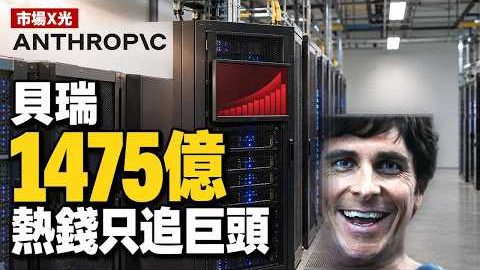
Crucially, an analytical breakdown from New Money emphasizes a profound structural evolution between 2000 and 2026. During the Dot-Com boom, market euphoria was distributed across hundreds of smaller speculative offerings—evidenced by 677 deals in 1996 and roughly 380 deals in 2000. In stark contrast, Renaissance Capital reports that total US IPO deal volume in 2026 is actually down roughly 35% compared to the prior year. Yet, overall capital raised through the first three quarters of 2026 has reached a record $147.5 billion (with annual projections approaching $148 billion), easily eclipsing historic full-year records. Rather than broad retail participation across hundreds of small speculative issuers, current systemic risk has concentrated into colossal capital transfers toward a handful of mega-trillion-dollar private entities.
2. The Capital Allocation Incentive: Dilution, Euphoria, and Market Timing#
Evaluating initial public offerings through a classical Graham and Dodd framework exposes the deliberate capital allocation incentives governing corporate leadership during euphoric market cycles. When executives and private private-equity sponsors choose to take an enterprise public, their core corporate finance objective is twofold: raise the maximum amount of liquid cash while minimizing equity dilution for pre-existing insiders.
Because corporate insiders and founding executives hold massive equity blocks, issuing stock during periods of extreme market optimism is uniquely advantageous. By bringing SpaceX public during a peak valuation window, management successfully raised over $86 billion while expanding the total share count by only about 4.85%. Had market sentiment been less exuberant or more demanding of conservative intrinsic value multiples, the company would have been forced to sell double or triple the volume of equity to generate that same cash balance—severely diluting existing shareholders.
From a value investing standpoint, this corporate action represents a deliberate transfer of long-term operational, technological, and capital-expenditure risk from private insiders to public equity markets. This dynamic directly mirrors the residential housing market: a prudent property owner does not list a home during a high-interest-rate buyer's market, but rather when open houses are packed and neighboring properties are selling at historic peak prices. Consequently, private insiders timing an IPO seek out the most euphoric, liquidity-flush market conditions to sell equity to public investors who are willing to pay exorbitant prices for cash-consuming or unproven operating models.
3. Historical Evidence: IPO Cycles as Market Thermometers (1980–2022)#
Long-term empirical market data compiled by Professor Jay Ritter of the University of Florida demonstrates that IPO capital issuance patterns predictably track macro market cycles over the past four decades. Periods of record capital raises historically align with broader market tops, whereas extreme contractions in IPO volume correspond with major market bottoms.
| Market Era / Year | IPO Volume / Capital Raised | Unprofitability Rate (% Loss-Making) | Subsequent Market Outcome |
|---|---|---|---|
| 1996–2000 (Dot-Com Peak) | 677 deals in 1996; ~$65B raised annually in 1999 & 2000 | 76% loss-making in 1999; 81% in 2000 | NASDAQ fell nearly 78% over 2.5 years following March 2000 |
| 2001–2003 (Dot-Com Trough) | Deals dropped to 80 in 2001 and 63 in 2003 | Public demand froze; issuance halted | Coincided with the broader tech market bottoming process |
| 2008–2009 (GFC Trough) | 21 IPOs in 2008; 41 in 2009 | Low issuance volume | Coincided directly with the S&P 500 market bottom in March 2009 |
| 2021 (Post-Pandemic Peak) | Record $119B–$120B raised across 311 deals | 75% loss-making (3/4 of deals) | Average 2021 IPO fell ~49% over the subsequent 3 years |
| 2022 (Market Correction) | 38 companies raising $7B | Public demand dried up following ~25% S&P 500 drop | Sharp contraction in capital raises following valuation adjustments |
As Michael Burry asserts, public IPO volume functions precisely as a market "thermometer, not a clock." High aggregate capital issuance measures the exact temperature of speculative fever present in the broader financial system, but it cannot be utilized as a timing tool to pinpoint the precise calendar date of an impending market crash.
4. Fundamental Disconnect: Capital Consumption vs. Owner Earnings#
Evaluating the financial statements of current mega-cap market leaders reveals a stark disconnect between trillion-dollar valuations and Benjamin Graham's foundational metric: durable owner earnings. Rather than generating self-sustaining free cash flow, prominent AI enterprises are operating as capital sinks, burning billions of dollars to construct infrastructure ahead of proven monetizable returns: * Anthropic: Seeks a $2 trillion public market valuation despite generating an operating loss of $693 million during the first 6 months of 2026. Without positive owner earnings, an enterprise targeting a multi-trillion-dollar evaluation offers zero margin of safety. * OpenAI & Hardware Supply Loops: OpenAI continues to absorb tens of billions of dollars for computing infrastructure while incurring massive operational losses. To support this demand, South Korean memory chip manufacturer SK Hynix raised ~$26 billion in US capital markets specifically to construct the hardware infrastructure required by loss-making AI model developers—creating a circular loop of vendor-capital expansion dependent on public equity markets. * SpaceX: While reporting positive net income last quarter, SpaceX continues to commit enormous ongoing capital expenditures toward rocket production, satellite network scaling, and computing infrastructure.
A wider quantitative screening of public market listings using Simply Wall Street data—evaluating 80 recent US listings with market capitalization exceeding $1 billion—confirms that speculative pricing extends beyond the top headline deals: * 60 companies entered the public markets via a traditional IPO. * 35 out of 60 are currently loss-making. * 11 out of the 25 profitable listings trade at trailing Price-to-Earnings (P/E) ratios above 50. * 42 out of 60 score 3 out of 6 or lower on Simply Wall Street's Value metric. * 22 out of 60 score 3 out of 6 or lower on Financial Health.
High unprofitability rates upon listing are not unprecedented—81% of public listings were loss-making in 2018. However, combining persistent operational cash burn with multi-trillion-dollar valuation targets completely removes any margin of safety for intelligent investors. As Charlie Munger famously remarked on speculative asset pricing, "No matter how wonderful it is, it isn't worth an infinite price."
5. Key numbers#
- SpaceX IPO Share Count & Proceeds (2026): 638.9 million new shares sold (~4.85% of outstanding shares) at $135.00 per share, raising $86.25 billion in cash.
- Anthropic Financials (First 6 Months of 2026): Operating loss of $693 million; targeting up to $100 billion raised at a $2 trillion IPO valuation.
- OpenAI Target Valuation (2026 IPO): Targeted valuation exceeding $1 trillion.
- 2026 YTD Total IPO Capital Raised (First 3 Quarters): $147.5 billion (projected annual total near $148 billion), surpassing the previous 2021 record of $119–$120 billion.
- 2026 US IPO Deal Volume Change (YTD vs Previous Year): Total deal count down roughly 35% according to Renaissance Capital.
- Historic Market Peak Unprofitability Rates: 76% loss-making in 1999; 81% in 2000; 81% in 2018; 75% in 2021.
- 3-Year Return on 2021 Average IPO (2021–2024): Average stock loss of approximately 49%.
- Simply Wall Street 60-IPO Sample Metrics: 35 unprofitable; 11 of 25 profitable companies maintain P/E > 50; 42 score ≤ 3/6 on Value; 22 score ≤ 3/6 on Financial Health.
6. What would change our view#
- A structural transition in mega-cap AI leaders from multi-billion-dollar operating losses to positive, durable owner earnings and self-sustaining free cash flow.
- A contraction in market equity multiples for new listings, where initial public offerings are priced at a significant discount to conservative intrinsic value estimates rather than historical peak multiples.
- A substantial reduction in capital expenditure requirements for AI computing infrastructure, allowing software cash flows to accrue to equity holders rather than capital equipment suppliers.
- A significant shift in capital allocation strategies toward protecting balance sheets and avoiding shareholder dilution during volatile market periods.
7. Practical Takeaway for Long-Term Investors#
An era characterized by structural IPO fever demands heightened analytical discipline rather than panic-driven selling or FOMO-induced buying. Disciplined value investors must stick strictly to principles established by Benjamin Graham and Warren Buffett: analyze core business models, scrutinize actual operational cash burn, stress-test debt liabilities, and require an undeniable margin of safety before allocating capital. Evaluating whether an enterprise produces genuine owner earnings at a rational purchase price remains the ultimate protection against the permanent loss of capital during speculative market tops. To explore more open-source company research or check a stock's intrinsic value, visit the DeepValues Research site or try the DeepValues app.
8. Sources#
Michael Burry: The TRUTH About the Anthropic and OpenAI IPOs..., video commentary by New Money Historical US IPO Data (1980–2026), compiled by Professor Jay Ritter, University of Florida US IPO Deal Volume Metrics (2026), Renaissance Capital US Listing Valuation Screener and Watchlist Analysis, Simply Wall Street

Watch
Source links
Watch & listen
- SpaceX, OpenAI, Anthropic: Burry's 2000-Style IPO Warning | Stock Market Podcast · EN
- Anthropic半年營運虧6.93億美元卻要2兆估值:貝瑞的AI IPO泡沫警告 YouTube · 中文
- Anthropic半年營運虧6.93億美元卻要2兆估值:貝瑞的AI IPO泡沫警告 Podcast · 中文